Editorial breakdown
2–3 daily
Financial newspaper editorials, each one worked through: core theme, the pillars of the argument, the key facts, and a written summary. Plus one international editorial every day.
 Best value
 OneStop | NextGen · Premium
English and Current Affairs together
from ₹240 ₹344 30% off
3 Months · 2 plans available · coupon ONESTOP25
Both batches in the OneStop paid Telegram group — English daily, Current Affairs daily plus monthly sets.
Overview
English and Current Affairs are the two sections that decide a mains paper, and they are the two that reward daily contact over last-minute effort. This is both batches on one payment and one validity.
Nothing is trimmed to make a bundle of it — you get the full editorial breakdown with its vocabulary, idioms, grammar analysis and twenty-five question practice set, the descriptive sets with their model answers, the Top 300 monthly MCQs with Exam-Ready Points, the one-liners, and the RBI Special paper.
Bought separately at the same validity the two come to more than this; the combined batch is priced below that total, and the card below shows both figures so you can check it.
Verified match report
NextGen checked the paper held on 12 September 2026 against the OneStop sets, question by question, and published the working — 52 pages of it, with a screenshot for every match.
Roughly ~45% of that section. One paper, one report — a hit rate on a single exam is a reason to look at the sample below, not a promise about the next paper.
Contents
Every item below is in the free sample — the Free sample tab shows the real thing. Nothing here is a description of something you have to pay to see first.
2–3 daily
Financial newspaper editorials, each one worked through: core theme, the pillars of the argument, the key facts, and a written summary. Plus one international editorial every day.
20 per set
Part of speech, English and Hindi meanings, five synonyms and five antonyms for every word — then the other parts of speech the same root produces.
every editorial
The idioms from the piece with their meanings and a fresh example sentence each, and a clause-by-clause analysis of the sentences whose structure is worth copying.
25 questions
Fill in the blanks, error detection, reading comprehension, cloze test and para jumble — five of each, at mains difficulty, with a worked solution for every one.
full model answers
Letter, email, report and situation-analysis prompts from the real papers, each with a complete model answer, its target and actual word count, and a vocabulary and syntax analysis of the answer itself.
every month
Banking, finance, insurance, economy, national and state affairs. Five options, a full explanation, and the reasoning behind the distractors.
on every question
A highlighted block of the related facts, dates and regulatory background — the other three ways the same news can be asked.
revision layer
The same month stripped to one sentence per fact, sectioned and numbered. Built for the last few days, when you need volume rather than depth.
separate paper
Its own MCQ set on RBI policy, frameworks, vision documents and circulars — for RBI Grade B, and for the mains papers where RBI questions run deeper than a one-liner.
Free sample
Not a contents page and not a feature list — a slice of one real set, rendered here in full, with nothing rewritten to look better on a sales page.
1 Editorial breakdown
Built on Next Phase for UPI — “Modest charges will enable healthy growth” — Business Standard, . The editorial is cited, not reprinted: every line below is NextGen's own analysis of it.
Core theme
A calibrated 0.4% MDR on high-value transactions ensures UPI’s financial viability and cybersecurity, while shielding common consumers and breaking market duopolies.
UPI handles 660M daily transactions (49% of global real-time volume), but government subsidies covered only 11% of system operational costs.
A modest 0.4% MDR (capped at ₹300 for ₹75,000+) applies only to P2M above ₹2,000 — covering 70% of transaction value but only 4–5% of volume.
Ensuring profitability enables banks and fintechs to invest in cybersecurity, break market duopoly, and ensure long-term sustainability.
The editorial strongly endorses the recent policy decision by the UPI Steering Committee to introduce a modest Merchant Discount Rate (MDR) of 0.4% on person-to-merchant (P2M) transactions exceeding ₹2,000, capped at ₹300 for ticket sizes of ₹75,000 and above. To protect common consumers and low-income merchants, all person-to-person (P2P) transfers and retail payments under ₹2,000 remain completely exempt. While purists argue against charging for digital public infrastructure, the author highlights the sheer fiscal necessity of the reform: UPI has exploded to 660 million daily transactions (representing 49% of global real-time volume), yet government budget support covers a meagre 11% of the network’s operational costs. Allowing banks and fintechs to monetise the top 4–5% of transaction volume — which accounts for 70% of total payment value — creates a self-sustaining financial framework. Crucially, this revenue stream allows ecosystem players to invest heavily in server bandwidth and cybersecurity. Furthermore, monetising UPI breaks the current market distortion, where zero-MDR converted digital payments into an unassailable duopoly dominated by well-funded tech giants. Dispelling fears that fees will drive users back to physical cash, the editorial concludes that modest, tiered pricing is the only sustainable pathway for UPI’s next decade of growth.
2 Vocabulary
Meaning in English and Hindi, five synonyms and five antonyms for every word — enough to use the word, not just recognise it.
Free from an obligation or liability
छूट प्राप्त, मुक्त
Trigger or ignite an action, dispute, or debate
भड़काना, आरंभ करना
Able to maintain itself independently without external aid
आत्मनिर्भर
Capable of working successfully; feasible
व्यवहार्य, टिकाऊ
Relatively moderate, limited, or small
मामूली, सीमित
Yielding financial gain or profit
लाभदायक
Protection of internet-connected digital systems
साइबर सुरक्षा
Movement or passing of money through an economy
प्रचलन
3 Idioms, word forms & grammar
All 4 from this editorial. The example sentence is written fresh rather than quoted, so you see the phrase working somewhere you could put it yourself.
Deep pockets Paragraph 4
Having large financial resources, wealth, or access to vast funding.
e.g. Foreign payment applications with deep pockets can easily burn cash to corner domestic digital market share.
Strike the balance Paragraph 4
To find a fair compromise between two opposing or competing demands.
e.g. Regulators must strike the balance between encouraging consumer adoption and keeping the banking system financially viable.
Sparked a debate Paragraph 2
To initiate or provoke widespread public discussion or intense argument.
e.g. The proposal to end free transactions sparked a heated debate between retail merchant federations and fintech associations.
In the long run Paragraph 3
Over an extended period of time in the future; ultimately.
e.g. Subsidizing 100% of payment operations out of the fiscal budget is unworkable in the long run.
One root, its whole family — because the exam rarely asks for the form you learnt.
One of 3 breakdowns in this set. The point is not the label — it is that you can reuse the shape in a descriptive answer.
Either the government substantially increased its support to banks and other service providers, or it allowed them to recover the cost from a section of users.
A compound sentence structured around the correlative coordinating conjunction pair “Either … or”. The first clause pairs the subject “the government” with the adverbially modified verb phrase (“substantially increased”), governing the compound prepositional object (“to banks and other service providers”). The second independent coordinate clause (“it allowed them to recover …”) uses an objective infinitive construction (“allowed [object: them] [infinitive: to recover]”).
4 Practice set
One question from each section is below — 5 of the 25, with the full solution the set gives. Attempt it before you open the answer; that is the only way this tells you anything.
Q1 · Fill in the blanks
Relying entirely on state grants to fund infrastructure is not ________; the network must generate internal revenue to remain ________.
Answer: (c) practicable / autonomous
‘Practicable’ matches viable/sustainable; ‘autonomous’ matches self-sustaining without external subsidies.
Q7 · Error detection
(A) Annual transaction volumes have grown / (B) at a compound annual growth rate of 188 per cent, / (C) while the average transaction values / (D) has increased by 155 per cent. / (E) No error.
Answer: (c) C
Subject–verb agreement error. The subject “values” is plural, which clashes with the singular auxiliary “has”. It must be “average transaction value has increased” as used in the text, or the verb must become plural “have”.
Q13 · Reading comprehension
The introduction of a tiered 0.4 per cent MDR on merchant transactions exceeding ₹2,000 constitutes a judicious macroeconomic compromise. By legally safeguarding small-ticket retail transactions and person-to-person (P2P) transfers under the zero-charge umbrella, the revised regulatory architecture insulates retail consumers and micro-merchants from friction. Concurrently, capturing transactional value from the top 4-5 per cent of payments—which account for roughly 70 per cent of gross settlement value—instills vital commercial solvency. This monetization framework provides fintech startups and commercial banks with the necessary margins to fund cutting-edge cybersecurity defenses, incentivize algorithmic fraud detection, and encourage competitive entry, thereby cementing the financial sustainability of India’s digital economy.
What critical empirical metric justifies the ₹2,000 threshold for imposing the 0.4 per cent MDR, according to the passage?
Answer: (b) Payments above ₹2,000 account for only 4-5 per cent of volume but constitute 70 per cent of value.
Paragraph 3 details: “…capturing transactional value from the top 4-5 per cent of payments—which account for roughly 70 per cent of gross settlement value—instills vital commercial solvency.”
Q18 · Cloze test
India’s digital payment architecture is entering a transformative era. Although UPI has (16) ______ retail commerce, operating the network without commercial revenue proved unsustainable. While budgetary compensation supported initial adoption, it was insufficient to ensure a (17) ______ model. The revised framework introduces a (18) ______ charge on wholesale payments while keeping retail transfers free. This monetization will generate essential margins, enabling fintechs to invest in advanced (19) ______. Furthermore, creating an even economic playing field prevents the sector from becoming a permanent (20) ______ dominated by cash-rich conglomerates.
Blank (18)
Answer: (d) modest
Denotes a reasonable, limited fee (0.4%) that does not deter users. The other four all overstate the charge, which is the opposite of the passage’s argument.
Q21 · Para jumble
A. Consequently, this massive deficit forced the ecosystem into a virtual duopoly dominated by firms with deep pockets.
B. While UPI has experienced explosive growth over the past decade, operating under a zero-MDR regime became financially untenable.
C. Therefore, introducing a modest fee on high-value merchant transfers is vital to foster competition and ensure network solvency.
D. To address this crisis, authorities faced the choice of drastically increasing state subsidies or permitting cost recovery from users.
E. Parliamentary findings highlighted this flaw by showing that government incentives covered only 11 per cent of operational costs.
Which sentence comes FIRST in the coherent paragraph?
Answer: (b) B
Sentence B introduces the core subject and historical premise (UPI’s growth versus zero-MDR financial strain). The full order is B → E → A → D → C.
5 Descriptive writing
From SBI PO Descriptive 25, covering informal e-mail writing, report writing, situation analysis. Every prompt comes with a full answer, its target and actual word count, and the vocabulary the answer is built to demonstrate.
Informal e-mail writing
Your younger sibling spends most of the day on social media and rarely reads books or newspapers. Write an email encouraging him/her to develop regular reading habits and explain how reading improves knowledge, critical thinking, communication skills, and career prospects.
Dear Rohit,
I hope this email finds you in great spirits. Recently, I’ve noticed you spending an excessive amount of time scrolling through social media while completely ignoring books. While digital connectivity is entertaining, it often leads to intellectual stagnation. To truly excel in your future career, cultivating a robust reading habit is absolutely indispensable.
Reading goes far beyond mere academic learning; it actively stimulates cognitive development and sharpens critical thinking. When you read diverse materials like newspapers or classic literature, you expose yourself to multifaceted perspectives that broaden your mental horizons. Furthermore, reading regularly enhances your vocabulary, allowing you to articulate your thoughts eloquently and confidently in professional settings.
In today’s highly competitive job market, strong communication skills and deep analytical abilities are paramount. Social media provides fleeting dopamine, whereas reading builds enduring knowledge. I strongly encourage you to start with just twenty pages a day. Let’s visit the local bookstore this weekend to pick up a few interesting titles.
Best wishes, Ankit
6 Current Affairs MCQs
Five options, a full explanation, and then the Exam-Ready Points — the surrounding facts that let you answer the same news asked a different way.
Q5 · Current Affairs
According to RBI data for March 2026, which major bank witnessed the highest month-on-month (MoM) growth in credit card spending at 29.62%, cementing its position with 26–28% of total market card spend?
Answer: (d) HDFC Bank
HDFC Bank recorded ₹65,337.7 crore in card spends in March 2026, surging 29.62% MoM. Total industry spending reached ₹2.19 trillion in March 2026, while the total card base touched 118.63 million.
Exam-Ready Points
Q6 · Current Affairs
The Appointments Committee of the Cabinet (ACC) extended the tenure of the MDs and CEOs of two major public sector banks, Bank of India (BoI) and Bank of Baroda (BoB), for three years. Who are these executives respectively?
Answer: (b) Rajneesh Karnatak and Debadatta Chand
The ACC extended the terms of Rajneesh Karnatak (MD & CEO, Bank of India) from 29 April 2026, and Debadatta Chand (MD & CEO, Bank of Baroda) from 1 July 2026, each for an additional period of three years.
Exam-Ready Points
Q7 · Current Affairs
During the 38th Foundation Day of the Securities and Exchange Board of India (SEBI), Finance Minister Nirmala Sitharaman digitally launched a nationwide investor awareness initiative. What is the name of this initiative?
Answer: (b) Mission Jagrook
SEBI celebrated its 38th Foundation Day on 25 April 2026, in Mumbai. Finance Minister Nirmala Sitharaman launched ‘Mission Jagrook’ to empower investors and deepen financial literacy nationwide.
Exam-Ready Points
7 Monthly one-liners
9 pages covering April 2026, sectioned into banking, digital / finance, insurance & economic affairs and national & states affairs. One sentence per fact, numbered — for the days when there is no time left to read anything long. Five of them:
8 RBI Special
14 pages for April 2026 on policy, frameworks, vision documents and circulars — same Exam-Ready Point structure throughout. Two of them:
Q1 · RBI Special
As part of its ‘effective technology’ pillar under Utkarsh 2029, the RBI is planning a major technological initiative to streamline its internal operations. What specific technology is the RBI developing?
Answer: (b) A purpose-driven indigenous large language model (LLM) based on AI.
The RBI will be issuing a framework on the use of AI in the financial sector and developing an indigenous AI tool based on a purpose-built large language model (LLM) for its internal operations.
Exam-Ready Points
Q2 · RBI Special
The Reserve Bank of India is developing a new platform under its ‘Payments Vision 2028’ roadmap to enable bank account portability. What is the designated name of this service?
Answer: (c) Payments Switching Service (PaSS)
The RBI is developing a ‘Payments Switching Service (PaSS)’ under its ‘Payments Vision 2028’ roadmap to enable bank account portability.
Exam-Ready Points
Curated by Ishwar Sachin — Content & Editorial Expert, Team NextGen Bankers. Formatted here for reading on a phone or a laptop, no PDF reader needed.
Plans
Both batches in the OneStop paid Telegram group — English daily, Current Affairs daily plus monthly sets. — up to 35%
off using the coupon ONESTOP25. No auto-renewal, no card saved, nothing
charged again when the period ends.
How the combined price is worked out
3 Months
English ₹172 + Current Affairs ₹172 = ₹344
30% off pay ₹240 you save ₹104
6 Months
English ₹265 + Current Affairs ₹265 = ₹530
35% off pay ₹344 you save ₹186
Choosing a plan above fills in the order summary below. Payment is by UPI from your own app — this site never sees a card.
Checkout
Payment is by UPI, from your own app. This site shows you an address and a QR code and nothing else — no card form, no gateway, no payment details stored anywhere. You check the order, you pay, you send the screenshot. One step at a time.
No plan chosen yet. Pick a validity above and it will appear here — from ₹240.
Pay the amount shown in your order summary above.
UPI ID
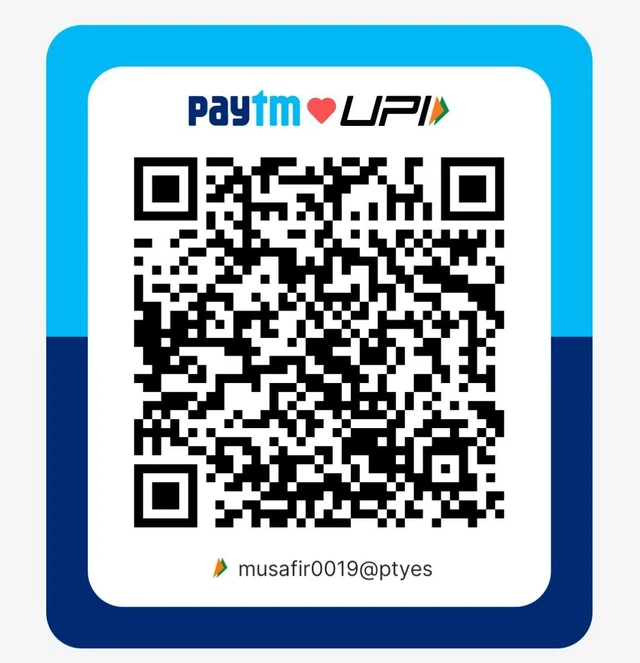
Pay the exact amount shown above using any UPI app — GPay, PhonePe, Paytm, or your bank's own app. Take a screenshot of the successful payment, then come back here for the last step.
I've completed the paymentAccess is given by hand, so we need to see the payment. Use either route — both stay open, and you are welcome to use both.
Telegram — fastest
Message @OneStopNextGenThe message is written for you. Attach your payment screenshot in the chat before you send it — Telegram links cannot attach an image on their own.
Opens your mail app with the subject and message filled in. Attach the screenshot in your mail app before hitting send — a mail link cannot attach a file either.
You will be added to the paid group once the payment is matched. If something goes wrong, message @OneStopNextGen — a payment that did not reach you is our mistake to fix, not a refund question.
Before you buy
Timed access to a daily stream of curated material — editorials broken down with vocabulary and practice, or monthly Current Affairs MCQs and one-liners, or both. You are buying access for the validity period you choose, not a one-off file.
Through our Telegram paid group. You pay by UPI, send the confirmation, and you are added. The PDF versions are shared there rather than downloaded from this website.
Access to the paid group ends. Everything free on this site — the channels, the vocabulary bank, the free PDFs, the articles — carries on exactly as before.
No. This website shows you a UPI address and a QR code; the payment itself happens inside your own UPI app. No card is processed here and no payment information is stored on this site at any point.
OneStop Premium is digital material delivered immediately after payment is confirmed, so we do not offer refunds once access has been given. That is exactly why a free sample of both the English and Current Affairs material is on this page — please read it before you pay. If you paid and did not receive access, that is not a refund question, it is our mistake. Message @OneStopNextGen and we will fix it.
No. Nothing free becomes paid because OneStop exists, and nothing free is held back to make the paid material look better.